What Is Dental Air Polishing?
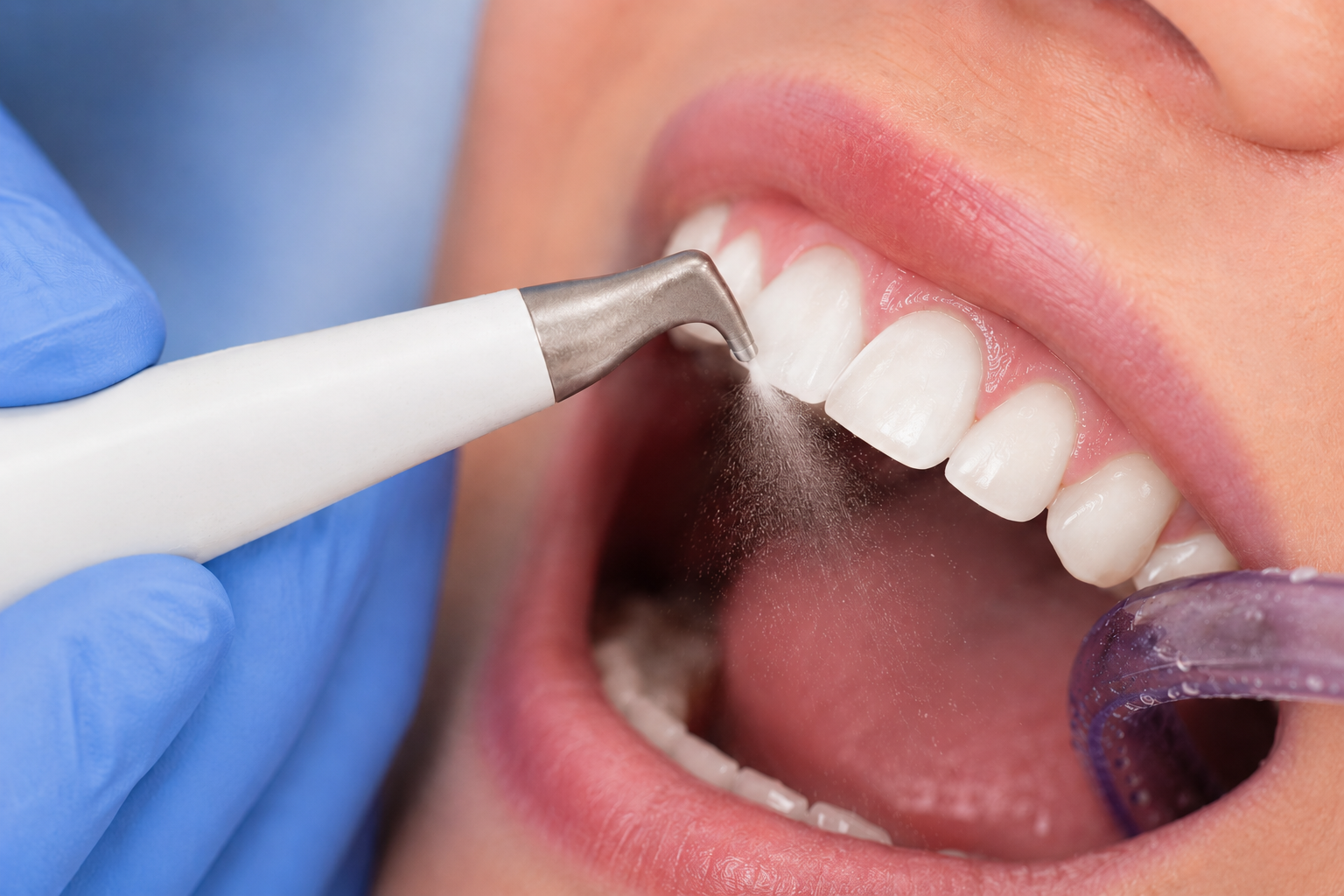
Dental air polishing is a dental cleaning technique that uses compressed air, water, and polishing powder to remove plaque, stains, debris, and biofilm from the surfaces of the teeth, gums, and tongue.
It may be used before or alongside scaling and root planing to help provide a more thorough dental cleaning.
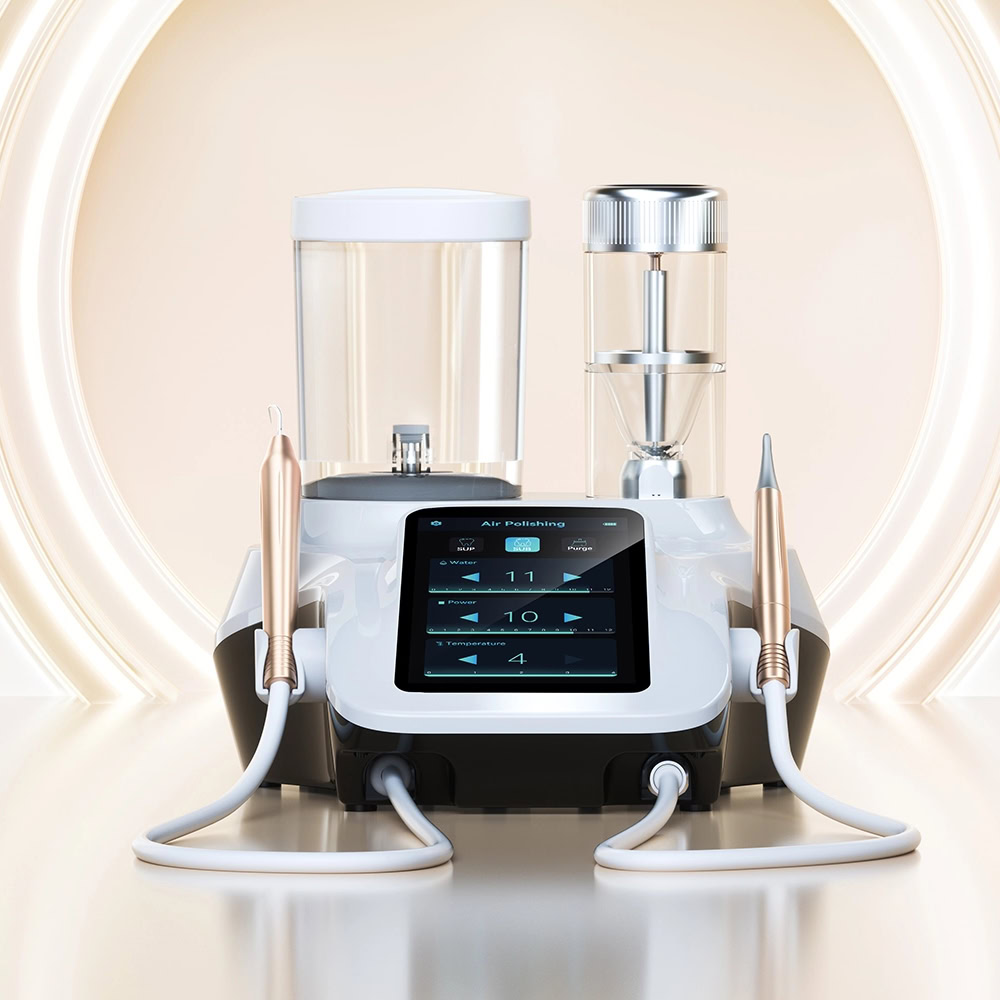
The Woodpecker PT-B Air Polishing System
We are thrilled to offer our patients the benefits of the Woodpecker PT-B to clean above and below the gum line! Its combination of air polishing and ultrasonic technology allows us to provide a more complete and efficient cleaning experience.
Erythritol Powder
Erythritol is a chemically neutral, water-soluble sugar alcohol. Erythritol powder is considered safe for use in subgingival areas below the gum line.
Research has found that subgingival air polishing with erythritol powder can improve plaque index scores and bleeding on probing. Research has also found no visible damage to hard or soft tissues after erythritol powder was used.
What Is the Air-Polishing Experience Like?
Air polishing is completed in several steps. Our hygienists first apply a disclosing solution to show our patients where most of the build is. This is beneficial to the hygienist to target those areas, but also to the patient as an education tool to improve oral hygiene. Then our hygienists use a fine mist made of air, water, and polishing powder onto the teeth to gently cleanse the surfaces of the teeth and remove stains, buildup, plaque, and biofilm. After the polishing is complete, the teeth and mouth are rinsed to remove any remaining powder and debris.
What Are the Benefits of Air Polishing?
Air polishing offers several benefits to patients.
Effective Stain Removal
The fine particles used during treatment can help remove stubborn stains and leave the teeth looking cleaner and brighter.
Biofilm Removal
Air polishing helps remove the sticky plaque matrix known as biofilm from tooth surfaces.
Gentler on Enamel
Compared with traditional polishing methods, air polishing is less abrasive on tooth enamel. Because it is less abrasive, it may also reduce the risk of damage to sensitive tissues in the mouth.
Improved Patient Comfort
Many patients find air polishing more comfortable than traditional polishing and scaling methods. The airpolisher uses warm water, to reduce tooth sensitivity and it reduces the amount of manual scraping needed, which may decrease discomfort. Air polishing is ideal for patients with sensitive teeth or gums.
Better Access to Hard-to-Reach Areas
The air stream can reach between the teeth, below the gum line, and into other areas that may be difficult to clean. Air polishers can also reach grooves and fissures that rubber polishing cups cannot access because of their shape. Rubber cups may leave stains and biofilm behind in these areas.
A Thorough and Comfortable Cleaning Option
Dental air polishing is an effective way to remove surface stains, plaque, debris, and biofilm from teeth. It can reach grooves, fissures, spaces between the teeth, and areas below the gumline. The Woodpecker PT-B can be used as part of a comprehensive approach to keeping your smile healthy, clean, and beautiful.